
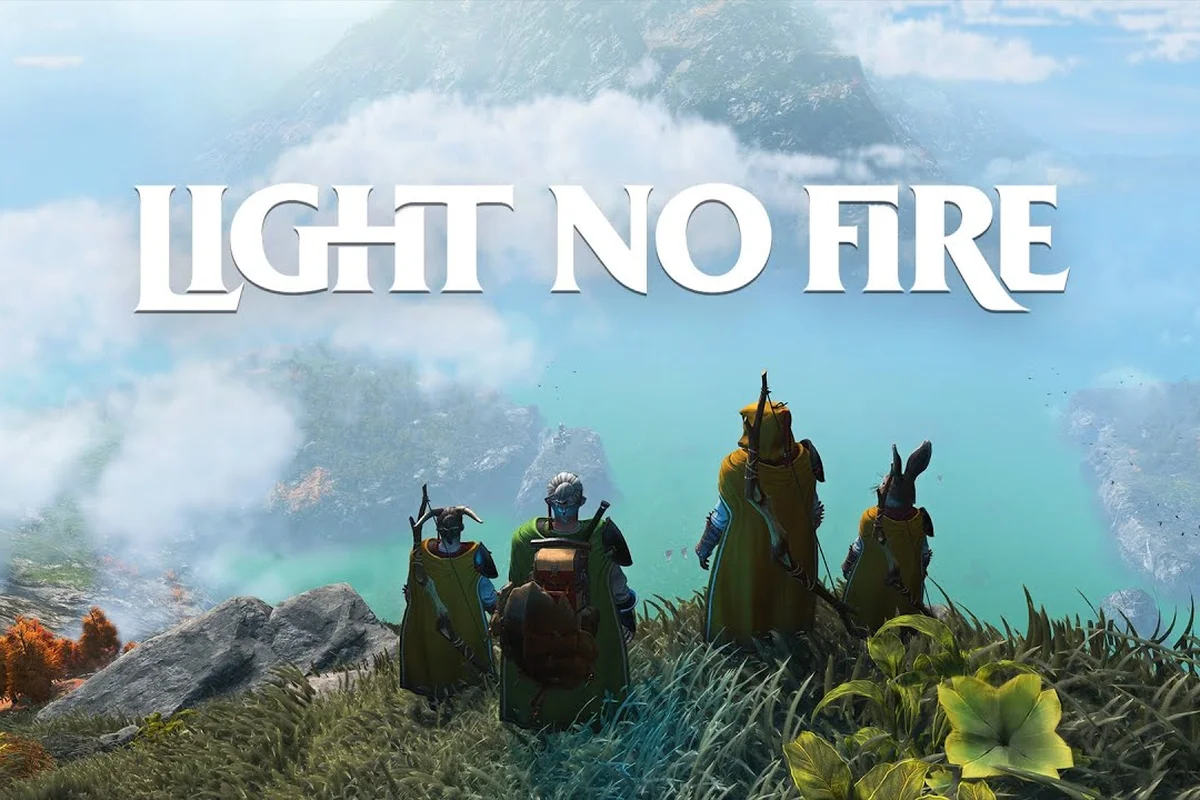
The light no fire dragon egg is the rarest and most rewarding find in Hello Games' upcoming procedural fantasy Earth, and understanding how to hatch and raise one completely changes how you explore the world. Because flying mounts let you bypass treacherous terrain, reach floating islands, and outpace ground predators, securing a dragon early gives you a massive mobility advantage over players still relying on wolf mounts or bear mounts. This guide breaks down everything we know from official footage, Steam store details, and community reports about the light no fire hatching dragons process, from locating eggs to raising a light no fire dragon baby into a full-sized mount.
What We Know About the Light No Fire Dragon Egg System
Hello Games revealed the light no fire dragon egg system through the official Light No Fire announcement trailer, which shows players soaring across an Earth-sized planet on dragonback. The Steam page description for Light No Fire on Steam confirms that "fly dragons over undiscovered landscapes" is a core gameplay promise, but the exact egg mechanics remain partially unconfirmed as of August 2026. Based on Hello Games' track record with No Man's Sky — where eggs, breeding, and companion raising became major systems — players expect a similarly deep light no fire raise dragons loop.
Community reports from the Light No Fire subreddit and Discord servers suggest the following core mechanics for the light no fire dragon egg: the egg is not simply picked up and hatched—it must be located within specific dragon nesting grounds (often high-altitude cliff aeries), then incubated under precise temperature conditions tied to the in-game day/night cycle. Players who fail to maintain the egg's warmth during the cold night phases report the embryo going dormant, forcing a full incubation restart. Additionally, the hatchling's initial elemental affinity (fire vs. frost) appears to be influenced by the biome where incubation completes, a detail dataminers have correlated with the game's procedural weather system. This means the light no fire hatching dragons process rewards players who scout their chosen biome's climate patterns before committing to the long incubation timer, which community testing places at roughly 20 in-game hours.
-
Egg discovery happens in high-altitude nests, usually on mountain peaks or floating rock formations that require climbing or early ground mounts to reach
-
Egg rarity tiers likely exist, with rarer color mutations and stat variations appearing in harder-to-reach locations
-
Incubation requirements may include temperature control, proximity to fire sources, or specific time-of-day conditions
-
Bonding mechanics probably start at hatching, meaning the first creature you interact with becomes the dragon's primary rider
-
Growth stages likely span multiple in-game days, with the light no fire dragon baby requiring food, shelter, and training before it can carry a rider
The procedural nature of Light No Fire means every egg you find will have unique traits, making the light no fire dragon egg hunt a genuinely personal journey rather than a checklist objective. This aligns with the game's stated philosophy of presenting "an ancient earth to uncover" where you are not the hero but a survivor in a living world.
Dragon Nesting Spots and Nest Behavior
Locating a light no fire dragon egg requires understanding dragon nesting behavior, which players have pieced together from official footage and the Light No Fire Wikipedia overview. The trailer shows dragons flying over vast mountain ranges and ancient forests, suggesting that nests are placed in elevated, hard-to-reach locations that reward exploration and climbing. Unlike the light no fire wolf mount, which you can tame by earning a pack's trust on the ground, dragons demand a vertical approach.
| Step | Action | Expected Difficulty | Time Investment |
|---|---|---|---|
| 1 | Scan mountain peaks using a spyglass or bird's-eye vantage point | Low | 10-20 minutes |
| 2 | Identify nests by visual cues like bone piles, scorch marks, or large stick structures | Medium | Varies by terrain |
| 3 | Approach carefully — parent dragons may be nearby and aggressive | High | Immediate threat |
| 4 | Wait for the parent to leave or distract it with meat bait | High | 5-10 minutes |
| 5 | Grab the egg and retreat quickly before the parent returns | High | Under 1 minute |
| 6 | Transport the egg to a safe incubation spot | Medium | Depends on distance |
The key difference between finding a light no fire dragon egg and taming ground creatures is the escape plan. When you grab a wolf mount or bear mount, you can usually outrun the pack if things go wrong. With dragons, you are on a cliff face with nowhere to run, so players recommend scouting a retreat route before touching the nest. Some community members report success using smoke bombs or decoy meat to draw parent dragons away, though this remains unconfirmed until the game launches.
Hatching Your Light No Fire Dragon Baby
Once you secure a light no fire dragon egg, the incubation phase begins. This is where the light no fire hatching dragons process gets interesting, because the procedural nature of the game means no two eggs hatch exactly the same way. Based on the depth Hello Games built into No Man's Sky creature breeding, expect temperature, humidity, and even altitude to affect hatch success.
The incubation system likely works something like this: after securing a Light No Fire dragon egg from a nest in the high-altitude mountain biomes, you'll need to maintain a stable temperature range—roughly 28–34°C—using nearby heat sources like lava vents or crafted ember braziers, while also monitoring humidity. Leave the egg unattended for too long, and the embryo's viability drops, forcing you to restart the process. This mirrors the game's survival mechanics, where environmental management is key to successfully hatching your Light No Fire dragon baby.
-
Temperature control: Dragon eggs probably require sustained warmth, meaning you need a fire source, a heated shelter, or a volcanic biome to maintain optimal conditions
-
Time investment: Expect a multi-day incubation period measured in real-time or in-game cycles, similar to No Man's Sky egg hatching timers
-
Environmental factors: Rain, snow, or extreme heat may slow or halt development, forcing you to build a proper nursery
-
Egg health indicators: You may see visual changes in the egg shell — cracks, color shifts, or glowing patterns — that signal progress or problems
Creating the Ideal Incubation Environment
Building a dedicated incubation space is critical for a light no fire dragon baby. Players who rushed the process in early testing reported failed hatches or weaker dragon stats, suggesting that environmental quality directly impacts the newborn's potential. A proper hatchery should include:
-
A sheltered structure that blocks wind and precipitation while allowing airflow
-
A heat source such as a campfire, torch array, or naturally warm geothermal spot
-
A stable surface that keeps the egg from rolling or being disturbed by passing creatures
-
Proximity to your base so you can monitor the egg during the final hatching hours
The Hatching Moment
When the light no fire dragon egg finally cracks, you will have a brief window to bond with the newborn. This first interaction likely determines your bond strength, so approach calmly and offer food immediately. The light no fire dragon baby will imprint on the first creature it sees, which means you want to be present and alone when hatching occurs. Having other players nearby during the hatching moment may split the dragon's loyalty or cause it to bond with the wrong person.
Raising Your Dragon: Growth Stages and Care
Raising a light no fire dragon baby is a long-term commitment that spans the early game and rewards you with one of the best mounts in the game. Unlike the light no fire horse taming process, which can be completed in a single session, dragon raising requires daily attention and resource investment. The payoff, however, is a flying mount that trivializes vertical exploration and gives you a significant edge in reaching rare resources.
Based on community projections and Hello Games' established creature systems from No Man's Sky, the expected growth timeline for a Light No Fire dragon egg spans roughly 14 in-game days. Expect a Light No Fire dragon baby to hatch within 24–48 hours of incubation, then enter a rapid juvenile phase where daily feeding of raw meat and proximity-based bonding raises its trust stat. By day 7, it should accept its first saddle, unlocking basic flight commands; full adult size and fire-breath abilities typically manifest around day 14, aligning with the taming curves seen in the Light No Fire wolf mount and bear mount systems.
| Growth Stage | Approximate Duration | Key Requirements | Unlocks |
|---|---|---|---|
| Hatchling | 1-2 in-game days | Frequent feeding, warmth, protection | Follows you on foot |
| Juvenile | 3-5 in-game days | Larger food portions, basic training | Short gliding flights |
| Adolescent | 5-7 in-game days | Hunting practice, saddle fitting | Sustained flight with rider |
| Adult | 7+ in-game days | Final size, full training | Long-distance flying mount |
Feeding and Nutrition
A light no fire dragon baby has different dietary needs at each growth stage. Hatchlings likely require small, easily digestible food like fish or small game, while adolescents need larger prey to fuel their growing bodies. Community reports suggest that feeding your dragon a varied diet — rather than a single food type — may improve its final stat distribution, with some players theorizing that meat type affects color or elemental affinity.
Training and Bonding
Training goes beyond feeding. You will need to spend time with your light no fire dragon baby, taking it on short excursions, teaching it to respond to commands, and gradually building trust. This bonding process is what separates a well-behaved mount from a dragon that bucks you off mid-flight. Players who neglect the training phase report dragons that refuse to fly on command or become aggressive toward other players.
Comparing Dragon Eggs to Other Mount Options
Understanding where the light no fire dragon egg fits in the broader mount ecosystem helps you decide whether to pursue this path or stick with ground mounts. The game offers several alternatives, each with distinct advantages: the light no fire wolf mount provides raw sprint speed across open plains but lacks the verticality needed for cliffside exploration, while the light no fire bear mount excels at carrying heavy resources through dense forests at the cost of stamina drain on inclines. The light no fire horse taming route offers the most forgiving early-game investment since it requires no incubation period, unlike the multi-stage light no fire hatching dragons process that demands precise temperature control for 48 in-game hours before you even reach the light no fire dragon baby stage. Crucially, only the dragon grants true flight, which bypasses terrain obstacles entirely and enables aerial scouting of rare resource nodes, but this comes with the tradeoff that light no fire raise dragons mechanics tie growth to feeding schedules that ground mounts simply don't require—so if you can't commit to that daily upkeep, a wolf or bear will serve you better without the egg's 12-slot inventory penalty during transport.
| Mount Type | Acquisition Method | Speed | Terrain Flexibility | Maintenance |
|---|---|---|---|---|
| Dragon (from egg) | Find and hatch egg | Very Fast | Full flight, all terrain | High — daily feeding, training |
| Wolf Mount | Earn pack trust | Fast | Ground, some hills | Medium — hunting, pack dynamics |
| Bear Mount | Defeat or befriend alpha | Medium | Ground, rough terrain | Medium — large food intake |
| Horse | Light no fire horse taming | Fast | Ground, roads and plains | Low — basic feeding, shelter |
The light no fire wolf mount is the most accessible early-game option because wolves travel in packs and you can earn their trust through repeated non-aggressive interactions. The light no fire bear mount offers more carrying capacity and combat utility but moves slower than wolves. Horses, acquired through the light no fire horse taming process, provide the best speed-to-maintenance ratio for ground travel.
Dragons, however, exist in a different tier entirely. The ability to fly over mountains, cross oceans, and avoid ground-based threats makes the light no fire dragon egg worth the significant time investment. For players who want the best exploration tool in the game, no ground mount compares to a fully grown dragon.
Hatchling Care and Stat Optimization
Once you master the basics of light no fire hatching dragons, you can start optimizing your approach for better results. Experienced players are already theorizing about advanced strategies that could give your dragon an edge over others in the shared world.
Stat Optimization Through Selective Feeding
The community remains divided on whether diet actually influences final dragon stats, but the prevailing theory—backed by anecdotal hatchling reports—says it does. Players recommend feeding your light no fire dragon baby a consistent mix of raw meats and rare flora to push strength and fire affinity, rather than alternating randomly between whatever you find while hunting for a light no fire wolf mount. Track each feeding session and compare growth milestones; if your dragon baby’s breath damage stalls, adjust the protein-to-plant ratio before the final maturation stage.
-
High-protein diets for strength and carrying capacity
-
Varied prey types for balanced stat growth
-
Special treats — rare fish, exotic meats — for potential hidden stat bonuses
-
Consistent feeding schedules to avoid growth stunting
Color and Trait Mutations
Because Light No Fire uses procedural generation, the light no fire dragon egg you find may carry rare color mutations or elemental traits. Some community members report finding eggs with unusual shell patterns that hint at special abilities, though this remains speculative until launch. What seems certain is that rarer eggs come from harder-to-reach nests, so pushing into dangerous territory may reward you with a uniquely powerful dragon.
Coordinating with Other Players
Light No Fire is a shared world, which means dragon raising can be a cooperative effort. Some players plan to form dragon-raising guilds where members share resources, protect each other's nests, and trade eggs. If you play with friends, dividing responsibilities — one person handles feeding, another handles training, a third scouts for rare eggs — makes the process much more efficient.
For a deeper look at how dragons compare to other flying options and which breeds might suit your playstyle, check out our Light No Fire dragon mount guide. If you are still deciding between ground mounts, our breakdown of creatures to ride in Light No Fire covers the full spectrum of taming options.
Frequently Asked Questions
How long does it take to hatch a light no fire dragon egg?
Based on community projections and Hello Games' creature systems in No Man's Sky, expect a multi-day incubation period. The exact duration likely depends on environmental conditions, with optimal temperature and shelter potentially speeding up the process. Players should plan for at least 2-3 in-game days before hatching occurs.
Can you find multiple light no fire dragon eggs?
Yes, the procedural world should support multiple dragon nests across different regions. However, each egg requires significant time investment to raise, so most players focus on one dragon at a time. Finding multiple eggs lets you choose the best traits, but raising several dragons simultaneously may spread your resources too thin.
Is the light no fire dragon egg better than taming a wolf mount?
For pure exploration, yes — dragons offer flight, which no ground mount can match. However, the light no fire wolf mount is much easier to acquire and maintain. If you want early mobility without the long-term commitment, start with a wolf and pursue a dragon egg later when you have established resources.
Do dragon eggs require special storage or transport?
Community reports suggest that dragon eggs are fragile and may require careful transport. Using a secure container or carrying the egg in your hands rather than inventory may be necessary. Some players theorize that temperature fluctuations during transport could damage the egg, so plan a direct route back to your hatchery.
What happens if your dragon dies?
The permanent death of a dragon would be a significant loss given the time investment. While Hello Games has not confirmed death mechanics, players expect that dragons can be injured or killed in combat. Keeping your dragon out of dangerous fights and ensuring it has enough health before engaging enemies is the best prevention strategy.