
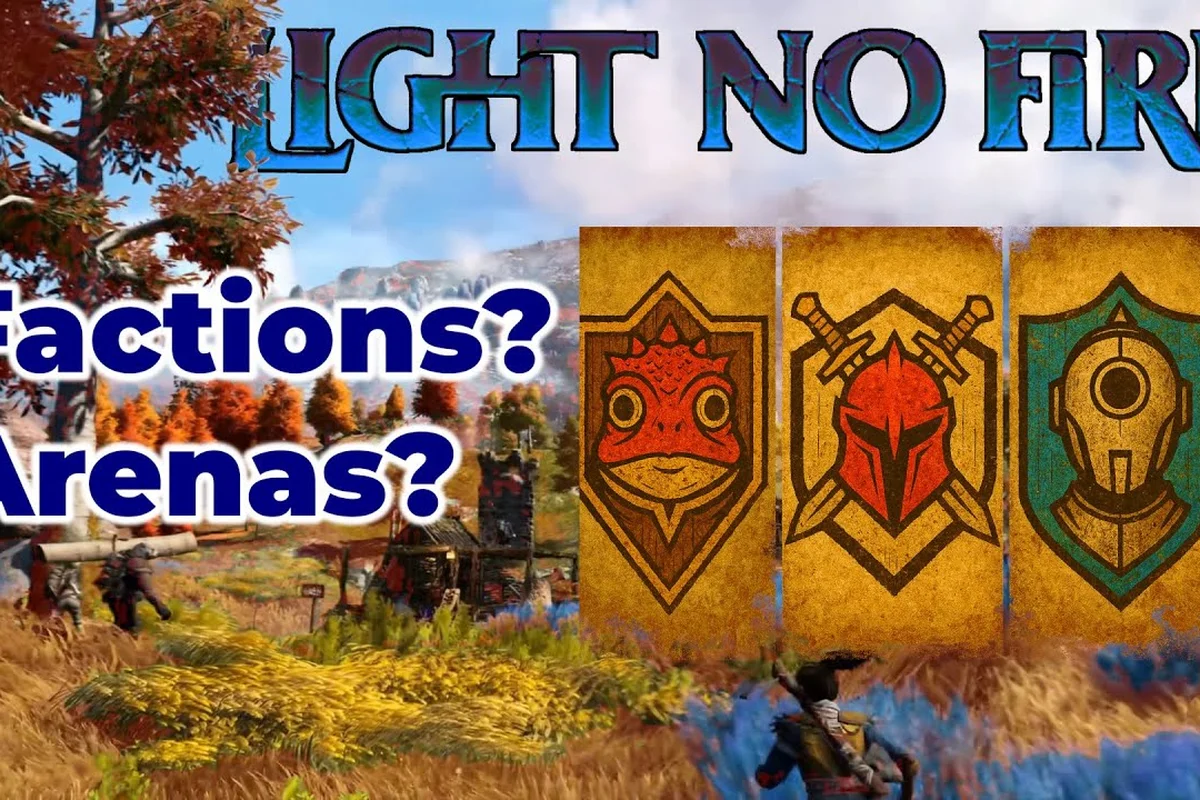
When Hello Games revealed Light No Fire at The Game Awards 2023, the promise of a shared planet the size of Earth immediately raised a practical question for co-op groups: can you carve out your own corner of that world without randoms interfering? The answer, based on everything the studio has said and the official Steam listing confirms, points toward a flexible server model where a light no fire private server becomes the safest way to enjoy group play with friends. Understanding how public servers, PvP vs PvE toggles, and trading rules interact will determine whether your settlement thrives or gets raided within a week.
Because the game blends MMO-style persistence with the co-op focus of No Man's Sky, the server architecture matters more than typical survival titles. The Steam page explicitly lists Single-player, Multi-player, Co-op, and Online Co-op support, which suggests multiple ways to host and join worlds. This guide breaks down what we know about private hosting, how it compares to the shared public experience, and how you can set up a light no fire private server for your crew before launch day arrives.
Light No Fire Private Server Options and Hosting Models
The core tension in Light No Fire's design is balancing a persistent shared world with the desire for private spaces. Hello Games has confirmed that the game features a multiplayer Earth where players meet across the globe, but they've also emphasized that striking out alone or with a small group remains viable. That flexibility points to a hosting model similar to No Man's Sky, where players can run dedicated sessions rather than relying solely on matchmaking.
-
Dedicated private sessions: A light no fire private server hosted by one player or a third-party provider, giving the host control over who joins and what rules apply
-
Public shared world: The default experience where you encounter strangers, see their builds, and trade or fight based on server rules
-
Co-op invite sessions: Smaller instances where only invited friends can join, similar to No Man's Sky's multiplayer lobbies
-
Solo instance: A completely offline or private world where your progress exists independently of the shared universe
The distinction between these modes matters because it determines your exposure to griefing, your access to community-built infrastructure, and whether you can pause or modify game rules. For groups that want a light no fire private server experience, the ability to control PvP settings and building permissions becomes the deciding factor.
| Hosting Model | Player Cap (Est.) | World Persistence | PvP Control | Best For |
|---|---|---|---|---|
| Solo Instance | 1 | Local save | N/A | Testing mechanics, screenshots |
| Co-op Invite | 4-8 | Host session | Host decides | Small friend groups |
| Private Server | 8-32 | Persistent | Full control | Communities, guilds |
| Public Shared | 100+ | Global persistent | Server rules | Trading, random encounters |
Because the game is still in development, these numbers come from community expectations rather than official confirmation. What matters is that the architecture appears flexible enough to support a light no fire private server without forcing every group into the chaotic public realm.
Light No Fire Public Server vs Private: Key Differences
Choosing between a light no fire public server and a private one shapes your entire experience, from how you gather resources to whether your base survives the night. The public shared world promises serendipitous encounters and a living economy, while private servers offer safety and control. Neither is objectively better, but they serve different playstyles.
The most significant difference lies in world persistence and ownership. On a public server, your buildings exist for everyone to see, but you don't control who builds nearby or whether someone decides to test their dragon breath on your roof. A private server flips that dynamic, giving you and your group exclusive rights to a region while still allowing the world to evolve around you.
| Factor | Public Server | Private Server |
|---|---|---|
| Base Security | Vulnerable to raiders | Controlled by group rules |
| Trading Opportunities | High volume, diverse | Limited to group members |
| Performance | Potential lag with high population | Smoother with fewer players |
| Discovery | Constant new encounters | Predictable environment |
| Rule Customization | Minimal | Full control |
| Community Resources | Shared farms, roads | Group-built infrastructure |
For players who value the light no fire mmo features like meeting strangers and participating in large-scale projects, public servers deliver that energy. But if your priority is a relaxed co-op experience where you can log off without worrying about your chests being looted, the private route wins. Many groups plan to run both, keeping a private server for serious building and venturing into public space for trading and exploration.
The multiplayer guide covers the technical side of connecting with friends, including how party systems and server types interact. That guide explains the player count expectations and dedicated server options in more detail, which pairs well with the strategic considerations here.
Light No Fire PvP vs PvE: Choosing Your Server Rules
PvP Ruleset Implications for Private Server Configuration
The Steam community forums reveal active debate about PvP versus PvE mechanics, directly impacting private server settings. Given Hello Games' No Man's Sky precedent, expect per-server toggles for damage modifiers, base raiding, and player-vs-player combat rather than hard faction locks. For a private server focused on cooperative building, configure PvP damage to 0% and disable base destruction timers—this preserves the "persistent buildings and communities" promise from the Steam description while eliminating griefing vectors. Groups prioritizing dragon-mount racing (a heavily discussed forum topic) may instead enable PvP only in designated arena zones.
Pre-Launch Server Hardware and Group Coordination Checklist
With release "To be announced" and expected after 2026, use the wait to prepare infrastructure. For a 4-player private server, standard peer-to-peer hosting suffices—Hello Games' co-op architecture in No Man's Sky supports this without dedicated hardware. For 8+ players, budget for a dedicated host with 8GB RAM and 100Mbps upload. Pre-coordinate with your group using the internal multiplayer guide's party system: designate one player as primary host, establish timezone-based play windows, and agree on trading rules (the Steam description confirms cross-globe player encounters, so decide whether your private server remains invitation-only or opens to random travelers).
The light no fire pvp vs pve debate has dominated Steam community discussions since the reveal, and the answer will likely vary by server rather than being a global setting. Hello Games has not confirmed whether PvP will be opt-in, always-on, or restricted to specific zones, but the precedent from No Man's Sky suggests a toggle-based system where players choose their aggression level.
For a light no fire private server, the PvP setting becomes a group decision rather than a personal one, since the admin typically configures the ruleset once for the entire community. Here's how the two modes typically play out in survival MMOs: PvE servers emphasize cooperative base-building and resource sharing, where a dedicated trading guide can flourish, while PvP servers introduce full-loot mechanics that force squads to coordinate defensive choke points and stash placement. This dynamic directly shapes light no fire group play, as clans on PvP realms often prioritize combat-ready loadouts over aesthetic construction, whereas PvE-focused teams can invest hours into terraforming without the threat of a raid wiping their progress.
-
PvE mode: All players focus on environmental threats, building, and trading without fear of player attacks. This suits groups who want a cooperative experience without constant vigilance.
-
PvP mode: Player combat is enabled, adding risk to resource gathering and base building. This appeals to groups who enjoy competition and raiding mechanics.
-
Hybrid approach: Some servers designate PvP zones while keeping safe areas around settlements, offering the best of both worlds.
The choice affects more than just combat. PvP servers tend to have higher tension, which changes how you build (defensive walls, hidden caches) and how you trade (escorts, secure meeting points). PvE servers encourage open collaboration, shared farms, and public infrastructure because there's no threat of betrayal.
| Playstyle | Recommended Mode | Key Benefit | Key Drawback |
|---|---|---|---|
| Casual Builders | PvE | Uninterrupted construction | Less excitement |
| Competitive Groups | PvP | High stakes, adrenaline | Base loss risk |
| Traders | PvE | Safe transactions | Lower item scarcity |
| Explorers | PvE | Focus on discovery | Fewer player encounters |
| Mixed Groups | Hybrid | Flexibility | Complex rules |
Community reports from the Steam forums suggest that most early adopters plan to start with PvE servers to learn the game mechanics before risking PvP encounters. That approach makes sense, especially since the game's survival systems and combat mechanics have not been fully documented yet. Starting with a light no fire private server in PvE mode lets your group master the basics before deciding whether to enable player combat.
Light No Fire Trading Guide: Economy and Exchange Systems
Trading in Light No Fire will likely become one of the most engaging social features, given the game's emphasis on a living world and player-driven economies. While the exact trading interface hasn't been revealed, the game's MMO features suggest a system that supports both direct player-to-player exchanges and potentially a marketplace mechanic.
For groups running a light no fire private server, establishing a trading system among members creates a self-sustaining economy that mimics the game's intended MMO loop without the chaos of public servers. Since Light No Fire emphasizes procedural world exploration and resource scarcity across biomes, a private server's smaller population (typically 10–50 players) lets you implement a barter-based ledger—tracking rare materials like Ancient Wood or Emberglass—instead of relying on a universal currency. This mirrors the game's design philosophy where trade is driven by biome-specific needs, so a player stationed near a desert can exchange Sunstone for a coastal group's Pearl Dust, ensuring every member has a defined role in the supply chain.
-
Direct trade: Face-to-face exchanges where both players confirm items and resources, likely with a trade window interface
-
Barter system: Since currency may not exist at launch, players might rely on resource exchanges, making item valuation a key skill
-
Community marketplaces: Designated trading posts where groups leave items for others, either free or with a note system
-
Crafting specialization: Groups that divide labor, with some members focusing on cooking, others on smithing, and trading the results
The cooking guide explains how prepared meals can become valuable trade goods, since cooked food likely provides buffs that raw ingredients don't. That guide's trading section covers turning meals into currency, which applies directly to private server economies where members exchange dishes for rare materials.
| Resource Type | Value Drivers | Trading Strategy |
|---|---|---|
| Cooked Meals | Buffs, healing | Exchange for rare ores |
| Crafted Weapons | Combat stats | Trade for building materials |
| Dragon Eggs | Rarity, mount potential | High-value luxury item |
| Building Materials | Construction needs | Bulk exchange for food |
| Rare Herbs | Potion ingredients | Barter for tools |
On a light no fire private server, trading becomes a trust exercise among friends rather than a risk with strangers. That trust allows for more generous exchanges, shared resource pools, and collaborative projects. Public servers, by contrast, will likely see more guarded trading, with players demanding fair value and watching for scams.
Light No Fire Group Play and Team Coordination
The light no fire group play experience hinges on how well your team coordinates roles, shares resources, and communicates across the massive map. With a planet the size of Earth, simply finding your friends could become a challenge without proper planning and fast travel systems.
Building a successful team on a light no fire private server requires more than just inviting friends. You need role specialization, shared infrastructure, and clear communication protocols: assigning dedicated Builders for base construction, Scouts for terrain mapping and resource node tracking, and Combat specialists for PvP defense against rival groups. Because private servers lack the matchmaking and automated party-finder of the official light no fire public server, your group must manually establish a shared waypoint system and voice-channel hierarchy before the first expedition, or coordination collapses the moment a Wyrmling swarm attacks your fledgling settlement.
-
Role assignment: Designate builders, hunters, cooks, and explorers so the group covers all survival needs without duplication
-
Shared base design: Plan a central hub with individual quarters, communal storage, and specialized crafting stations
-
Resource pooling: Establish a group inventory system where rare materials go to the member who needs them most
-
Expedition planning: Coordinate exploration routes so multiple team members don't waste time covering the same region
-
Emergency protocols: Set meeting points and signals for when someone gets into trouble far from base
The friends connection guide covers how players will connect in the shared world, including server instances and group mechanics. That guide's section on coordinating expeditions pairs well with the team play strategies discussed here, especially for groups planning large-scale exploration.
| Team Role | Primary Responsibilities | Key Skills |
|---|---|---|
| Builder | Base construction, repairs | Resource management, design |
| Hunter | Food gathering, combat | Tracking, weapon proficiency |
| Cook | Meal preparation, buffs | Recipe knowledge, ingredient sourcing |
| Explorer | Map discovery, scouting | Navigation, mount handling |
| Crafter | Tool and weapon production | Material gathering, recipe mastery |
For light no fire team play, the private server model shines because it eliminates the chaos of random players interfering with your group's plans. You can build a settlement without worrying about strangers, coordinate expeditions without competing for resources, and develop a shared economy that benefits everyone. The trade-off is losing the serendipity of public encounters, but many groups find that a fair price for a stable, cooperative experience.
Setting Up Your Private Server: Practical Preparation
Steam Listing Signals for Private Server Expectations
The Steam store page (App ID 2719590) already telegraphs Hello Games' server architecture intentions. It lists Single-player, Multi-player, Co-op, and Online Co-op simultaneously, but notably omits "MMO" or "Massively Multiplayer" tags. This mirrors No Man's Sky's approach: a shared universe with instance-based player encounters rather than a persistent single shard. For private server planning, this suggests the architecture will likely support session-based co-op instances (2-4 players) rather than dedicated persistent worlds, meaning your "private server" may function more like a password-protected instance than a standalone host.
Persistent Building Ownership in Private Worlds
The Steam description emphasizes "Construct persistent buildings and communities," which carries specific implications for private server administration. Unlike public servers where Hello Games may enforce build limits per region, private servers can allocate larger construction budgets per player. Based on No Man's Sky's base-building architecture, expect a per-player part limit (historically 20,000 components) that the host can potentially modify. For a group of 4-8 players, designate separate building districts to prevent render-distance conflicts, since the procedural planet's Earth-sized scale means distant builds may not load simultaneously for all players.
While the exact server setup process won't be confirmed until launch, players can prepare by understanding what a light no fire private server will likely require. Based on Hello Games' experience with No Man's Sky and the Steam listing's features, the setup should follow familiar patterns for dedicated server hosting.
Before you start, verify that your hardware meets the game's baseline requirements—running a Light No Fire private server demands significantly more resources than a standard client, as the host machine must simultaneously simulate the entire world state, handle all NPC AI, and process network traffic for every connected player. For a group of 5–10 players, you'll need at least 16GB of RAM and a modern quad-core CPU, but if you plan to open the server to a larger community or enable intensive features like the full PvP vs PvE combat systems, budget for 32GB and a dedicated SSD to reduce chunk-loading stutters. Additionally, decide early whether you're hosting on your local machine or renting a VPS; a local setup is fine for testing with friends, but a VPS with a static IP is essential for a persistent public server that others can join reliably.
-
Hardware requirements: A machine that can run the game plus host additional players, likely requiring a solid CPU and 16GB+ RAM
-
Network configuration: Port forwarding or a hosting service to ensure friends can connect reliably
-
Group agreements: Decide on PvP settings, building permissions, and resource sharing rules before anyone starts playing
-
Backup strategy: Regular world saves to prevent catastrophic loss from bugs or griefing
-
Moderation plan: Designate an admin who can handle disputes and enforce group rules
The beginner guide covers the core survival loop and getting started, which is essential reading before you commit to running a server. That guide's section on navigating the shared world and multiplayer explains how the game's social features work, giving you context for making server decisions.
| Preparation Step | Time Investment | Purpose |
|---|---|---|
| Hardware check | 1 hour | Ensure hosting capability |
| Network setup | 30 minutes | Enable friend connections |
| Rule discussion | 1-2 hours | Align group expectations |
| World backup | Ongoing | Protect progress |
| Test session | 2-3 hours | Verify stability and fun |
Community reports suggest that the most successful groups treat server setup as a collaborative process rather than a single person's burden. Dividing responsibilities, from hardware management to rule enforcement, prevents burnout and keeps the group cohesive. A light no fire private server is only as good as the team running it, so invest time in planning before launch.
Frequently Asked Questions
How do I set up a Light No Fire private server?
The exact setup process will be confirmed closer to launch, but expect a dedicated server option similar to No Man's Sky. You'll need a capable PC, stable internet connection, and port forwarding or a hosting service. Designate one member as the host or rent a third-party server for 24/7 uptime.
What are the main differences between public and private servers?
Public servers offer high player density, diverse trading opportunities, and serendipitous encounters, but they come with griefing risk and performance issues. Private servers provide full control over PvP settings, building permissions, and group composition, at the cost of a smaller player pool and less trading variety.
Can I play PvE on a Light No Fire private server?
Yes, a private server lets you disable player combat entirely, creating a pure PvE experience. This is ideal for groups focused on building, exploration, and cooperative survival without the threat of raids. You can always enable PvP later if your group wants more challenge.
How does trading work on a private server?
Trading on a private server operates on trust among group members. You can exchange resources, crafted items, and prepared meals directly, or establish a shared marketplace where members leave items for others. The cooking guide explains how meals become valuable trade goods in this system.
Will Light No Fire have dedicated server hosting?
Yes, dedicated server hosting is expected. The Steam listing confirms Multi-player and Online Co-op support, pointing toward dedicated options. Hello Games hasn't detailed the hosting model, but community expectations align with No Man's Sky's approach: player-hosted sessions plus third-party hosting for persistent communities.